
“And Grant You Peace” A Night of Scholarship, Song, and Memory for Dr. Gabriel Barkay
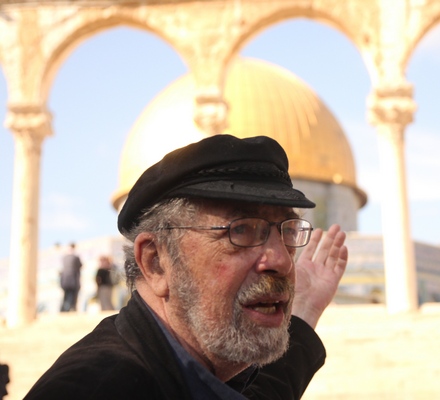
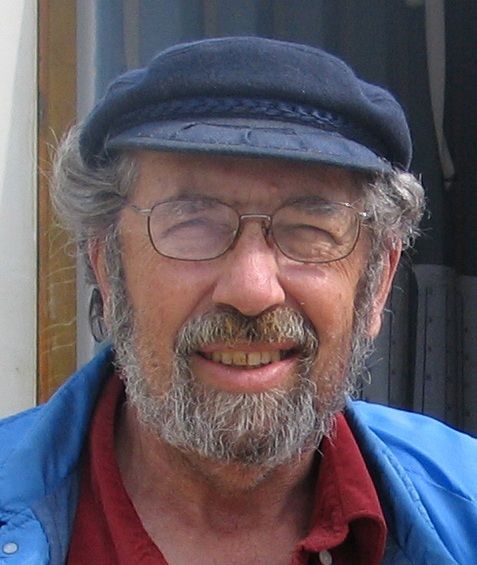
This past Tuesday, February 10, 2026, the hall at Yad Ben-Zvi in Jerusalem was filled with friends, family, colleagues, and students who had gathered to mark the shloshim (30 days) of our teacher, co-founder, and friend, Dr. Gabriel Barkay (z”l). The event, titled “וְיָשֵׂם לְךָ שָׁלוֹם “ (And Grant You Peace), a fitting tribute to the man who discovered the oldest biblical text containing the Priestly Blessing, was a mosaic of a life dedicated to Jerusalem, blending deep academic insight with touching personal memories.
The evening was honored by a special message from the President of the State of Israel, Isaac Herzog, who joined us in spirit while traveling in Australia. President Herzog described Gabi as “one of the giants of archaeology” whose work was crucial in proving the deep connection of the Jewish people to their land. He noted that Gabi did not settle for “nostalgic yearning” or “metaphorical stones,” but worked tirelessly to find “actual, physical proof” of our history. President Herzog concluded, quoting the poignant lyrics of Naomi Shemer:
“If you hewed stone in the mountain to build a new building, / Not in vain, my brother, did you hew for a new building, / For from these stones – the Temple shall be built.”
We wish to thank Israel Caspi for his help in connecting us with President Herzog during his travels so that these meaningful words could be shared.
The memorial was initiated, organized, and moderated by Renana Zer-Kavod Erlich, who felt a deep personal obligation to honor Gabi’s memory after being unable to attend his funeral. She joined forces with Zachi Dvira and Gadi Dahan—a dear friend and neighbor of Gabi’s who also guides at the Sifting Project—to bring together the Israel Archaeological Foundation and Yad Ben-Zvi, creating a space where his legacy could be fully celebrated. The atmosphere was set with moving artistic tributes, beginning with the legendary Shuli Natan performing a Hungarian lullaby as a tender nod to Gabi’s childhood roots in Budapest. This was followed by a moving poem read by Gabi’s partner, Esther Yerushalem, titled “A Poem in Memory of My Beloved”.
Opening words were shared by leaders of some of the institutions central to Gabi’s life, including Yaniv Mezuman, CEO of Yad Ben-Zvi, and Dr. Yehiel Zelinger of the Israel Antiquities Authority (IAA). Alon Shavit, CEO of the Israeli Institute of Archaeology and Editor-in-Chief of Ariel Publishing, offered a glimpse into Gabi’s final days of scholarship, speaking about his last work on the Song of Songs. He noted that Gabi was very particular about exactly how the text should be translated into English and expressed the hope that they will be able to complete this significant work posthumously. We also heard from Elad Barkay, Gabi’s son, who shared personal reflections on his father’s legacy.
The core of the evening focused on Gabi’s immense contribution to the understanding of the Bible and the Land of Israel. Zachi Dvira, Director of the Temple Mount Sifting Project, spoke on the theme ‘Man of Jerusalem, Man of Sherds and People – The Story of His Life.’ Tracing Gabi’s journey from childhood, Zachi painted a picture of a man who was far more than a dry academic; he was a visionary who understood that archaeology is ultimately about the human story. Distinguished scholars then delved into specific areas of Gabi’s research, with Prof. Aaron Demsky of the Israel Archaeological Foundation discussing the use of the Priestly Blessing in personal burial customs, and Prof. Israel Knohl analyzing the contribution of the Ketef Hinnom discovery to Torah documentary hypothesis research focusing on two phases of the priestly source. Additionally, Assaf Avraham presented “Anatomy of a Wall,” offering an engineering perspective on Iron Age II fortifications based on finds from the Trench Gabi’s excavation data at Lachish.
A panel discussion, moderated by Prof. Ronny Reich, titled “Friends Tell Stories about Gabi” provided further depth. Rabbi Prof. David Golinkin, President Emeritus at the Schechter Institutes, Inc., offered profound insight into Gabi’s genius, revealing that as a baby in the Budapest Ghetto in 1944, Gabi shared his crib with a hidden Torah scroll. Golinkin suggested that this early proximity might explain why Gabi grew up to be a man who knew the entire Bible by heart. He compared Gabi to the great sages, describing him as a rare combination of a “plastered cistern” that never lost a drop of knowledge and a “surging spring” of constant innovation. Golinkin also recounted the pivotal moment the Sifting Project was born, noting that when Zachi Dvira first showed Gabi artifacts from construction rubble, Gabi quoted Pirkei Avot: “In a place where there are no men, strive to be a man”. Rabbi Golinkin ended with a fitting quote from Shakespeare, “He was a man, take him for all in all, I shall not look upon his like again“. You may read a translation of his full text here.
Steve Adler, former President of the National Labor Court and a friend of 45 years, placed Gabi in the company of legal giants like Aharon Barak and Yitzhak Zamir. He spoke movingly about how their families became intertwined over decades, noting with pride that “our children have lit a bonfire of friendship” that continues the legacy. He recalled family hikes where Gabi was an inexhaustible well of knowledge, providing a biblical story or archaeological detail for every site they passed.
Throughout the tributes, a common theme emerged: in an era of niche specialization, Gabi was a rare polymath. Colleagues compared him to a “human AI” of archaeology and history, capable of recalling vast amounts of data across multiple disciplines. With over 200 publications to his name, Gabi possessed a photographic memory for details. He would often direct colleagues to a specific author, volume, and plate to find a parallel for an artifact. Yet his true talent lay in weaving these facts into a story; he was a master storyteller who could hold an audience captive. This natural ability to communicate history made him a sought-after expert for many documentaries, including The Naked Archaeologist, Lost Temple, Forbidden History, Living in the Time of Jesus, Bloodline, Unveiling Jerusalem, and Secrets.
In a particularly poignant tribute, Chaim Karel and Avner Goren shared memories of their very last joint trip with Gabi to Tel Lachish, a site of his major excavations. In a moment that captured this deep connection, Chaim Karel held up a stone he had retrieved from the debris at Ketef Hinnom—the site of Gabi’s most famous discovery. He marveled at how the stone had naturally fallen from the cliff face above Cave 24, resting precisely on the burial headrest (mishkavei harosh) as if waiting to be found. He shared his plan to affix this stone to Gabi’s headstone, noting that this site was truly the peak of Gabi’s archaeological work.
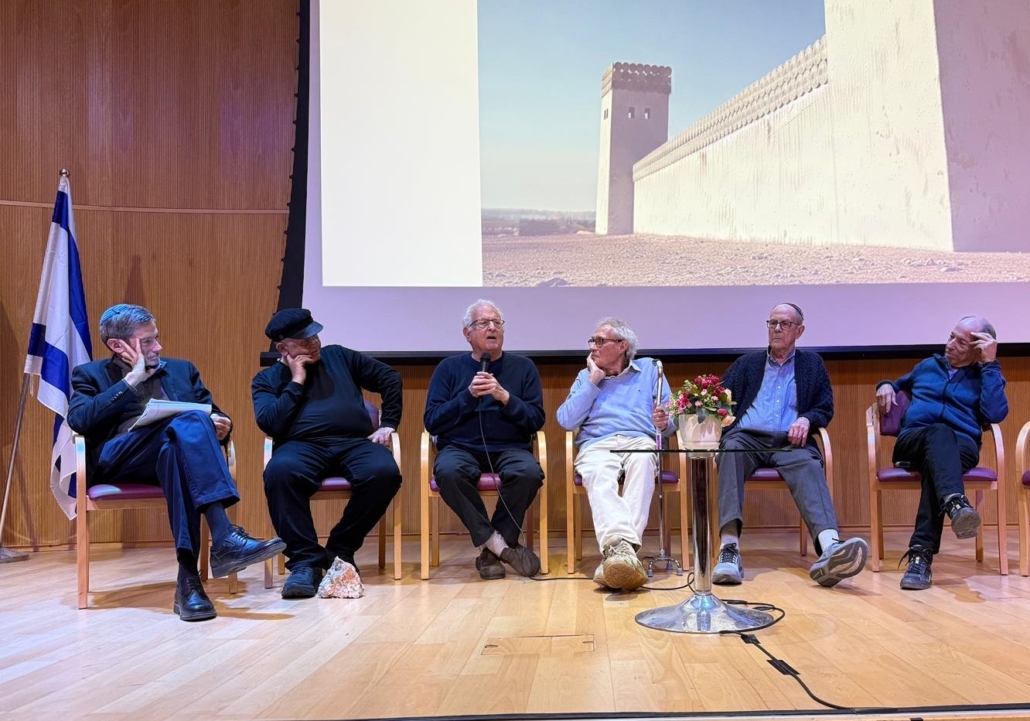
The panel also included Israel Caspi from the Public Committee to Prevent the Destruction of Antiquities on the Temple Mount, Michael Keren, a childhood friend. President Dr. Paul Wright from Jerusalem University College (JUC), and Dr. Andy Vaughn, CEO of ASOR sent fitting tribute videos which can be seen here and here. The evening concluded in the most fitting way possible for a man whose heart beat in rhythm with this city. The entire hall joined Shuli Natan in a powerful rendition of “Yerushalayim Shel Zahav” (Jerusalem of Gold).
While the shloshim marks the end of the initial mourning period, the work of Dr. Gabriel Barkay continues in the research we publish, the earth we sift, and the students he inspired. As Gabi himself often said, “The greatest discovery wasn’t a scroll or an artifact… it was the people.”
Yehi Zichro Baruch – May his memory be a blessing.
Discover more from The Temple Mount Sifting Project
Subscribe to get the latest posts sent to your email.




i was sorry to be unable to be present to honour one of the giants of current archaeology—may he rest in peace.