
The “Degraded Hasmonean Coins” – A Silent Witness to the Price of Brotherly Conflict
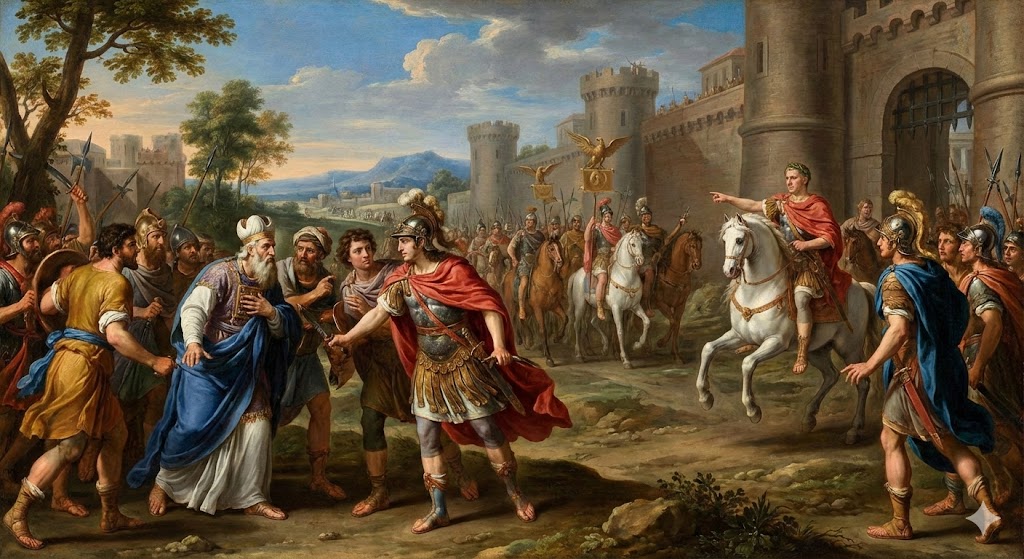
About 2,092 years ago, the magnificent Hasmonean kingdom fell into a bloody civil war. Consumed by hatred and competition for power, brothers Hyrcanus II and Aristobulus II crossed every red line in their struggle for the throne following the death of their mother, Queen Shlomzion. Their rivalry drove them to invite the Roman Empire to intervene in Judea’s internal affairs. Rome seized the opportunity, and in keeping with its “Divide and Conquer” policy, never left – ultimately bringing about the end of Jewish sovereignty in the Land of Israel for two thousand years.
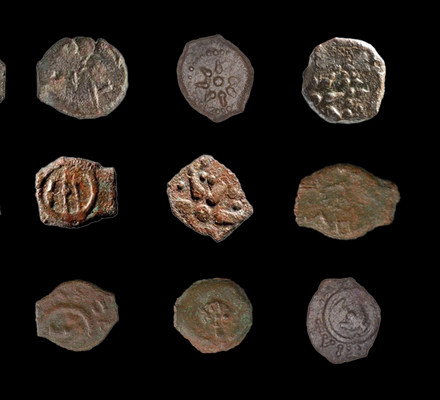
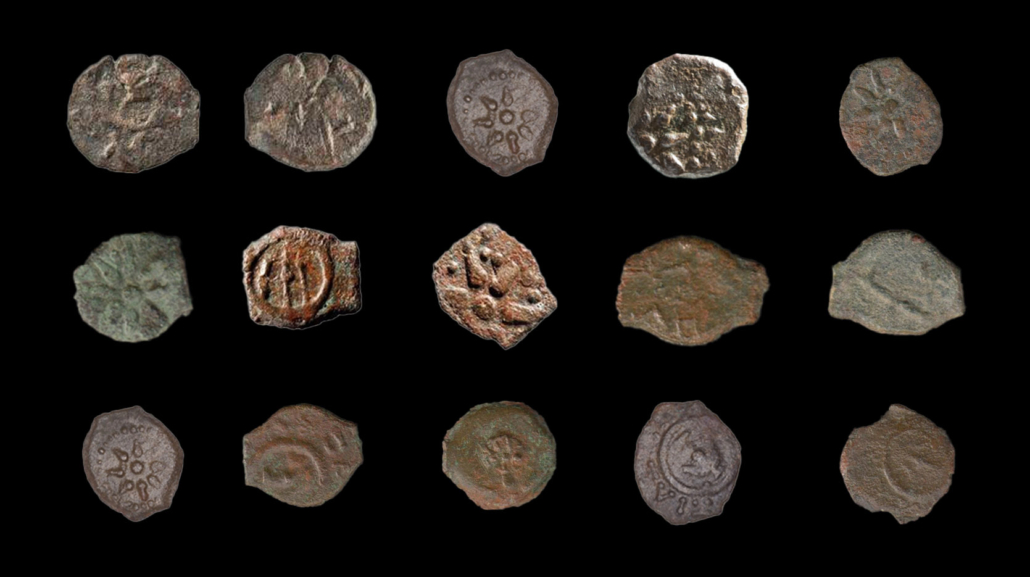
The twilight of the Hasmonean dynasty does not remain solely in history books; it is clearly reflected in the soil of the Temple Mount, particularly in a special find: the bronze “Degraded Hasmonean Coins.” These coins, minted during the final decades of Hasmonean rule (~60-40 BCE), were previously misidentified as sloppy versions of the Royal coins of King Alexander Jannaeus who ruled from 104 to 76 BCE.
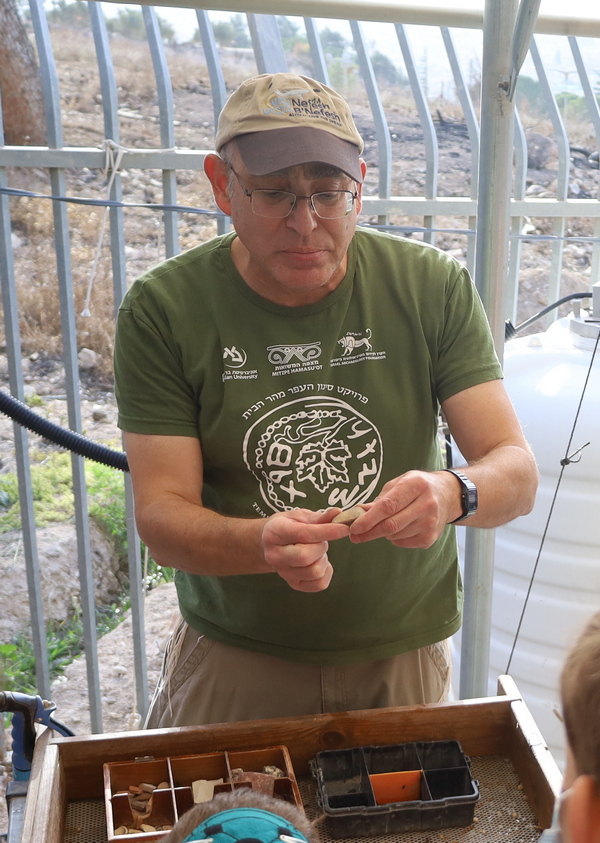
Now, new research sheds light on these findings. Haim Shaham, an archaeologist and numismatist at the Sifting Project currently completing his doctoral thesis at Bar-Ilan University, attributes these coins to the dark period of the civil war. The resulting economic crisis and Roman occupation limited the weakened Hasmonean rulers to minting only tiny, degraded bronze coins weighing less than a gram.
A Unique Temple Mount Statistic
A fascinating statistic arising from the research is the unusual concentration of these coins on the Temple Mount. About 59% of the Hasmonean coins discovered in the Sifting Project are of this type, compared to only about 34% in other excavations in Jerusalem.
Shaham postulates that this reflects the pilgrims arriving from outside Jerusalem. Rural communities, harder hit by the economic downturn and reverting to a barter economy, likely carried these very small denominations, whereas the established urban dwellers of Jerusalem continued to use more valuable coinage.
Our most recent statistics show that 134 degraded coins of this type have been identified so far – making this the single most numerous coin type of the Project (comprising about 3.8% of all cataloged coins). With thousands of coins still awaiting conservation due to budget constraints, this number is likely to grow.
A Lesson from the Soil
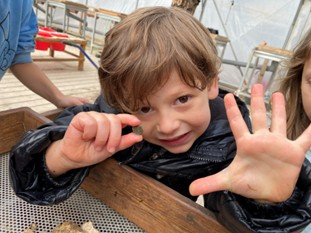
Two years ago, during a Hanukkah sifting activity, four-year-old Ivri Dvira (yes – Zachi Dvira’s son) took part and found the first coin of his life. It was a coin of exactly this type – a silent testimony to the price of division. We look at these findings with the hope that the next generation will be wise enough to learn from the past, avoid civil war, and protect our current National Home.
Just as little Ivri discovered a silent witness to our history, you too can play a part in revealing Jerusalem’s past. This Hanukkah, we invite you to step out of the history books and into the sifting facility. Join us to sift the Temple Mount soil, uncover hidden artifacts, and perhaps even find another Hasmonean coin waiting to tell its story.
A Glimpse into the Temple Mount Treasury
In honor of the holiday, we have also prepared a special exhibition featuring finds related to Hanukkah. A highlight of the display is a reconstruction of a sealed oil jug from the Temple treasury in the Hasmonean period – bringing the story of the Temple service and the miracle of the oil to life right before your eyes.
Discover more from The Temple Mount Sifting Project
Subscribe to get the latest posts sent to your email.


Leave a Reply
Want to join the discussion?Feel free to contribute!